
From Video Walls to Visual Operations

Is "Seeing" still enough?
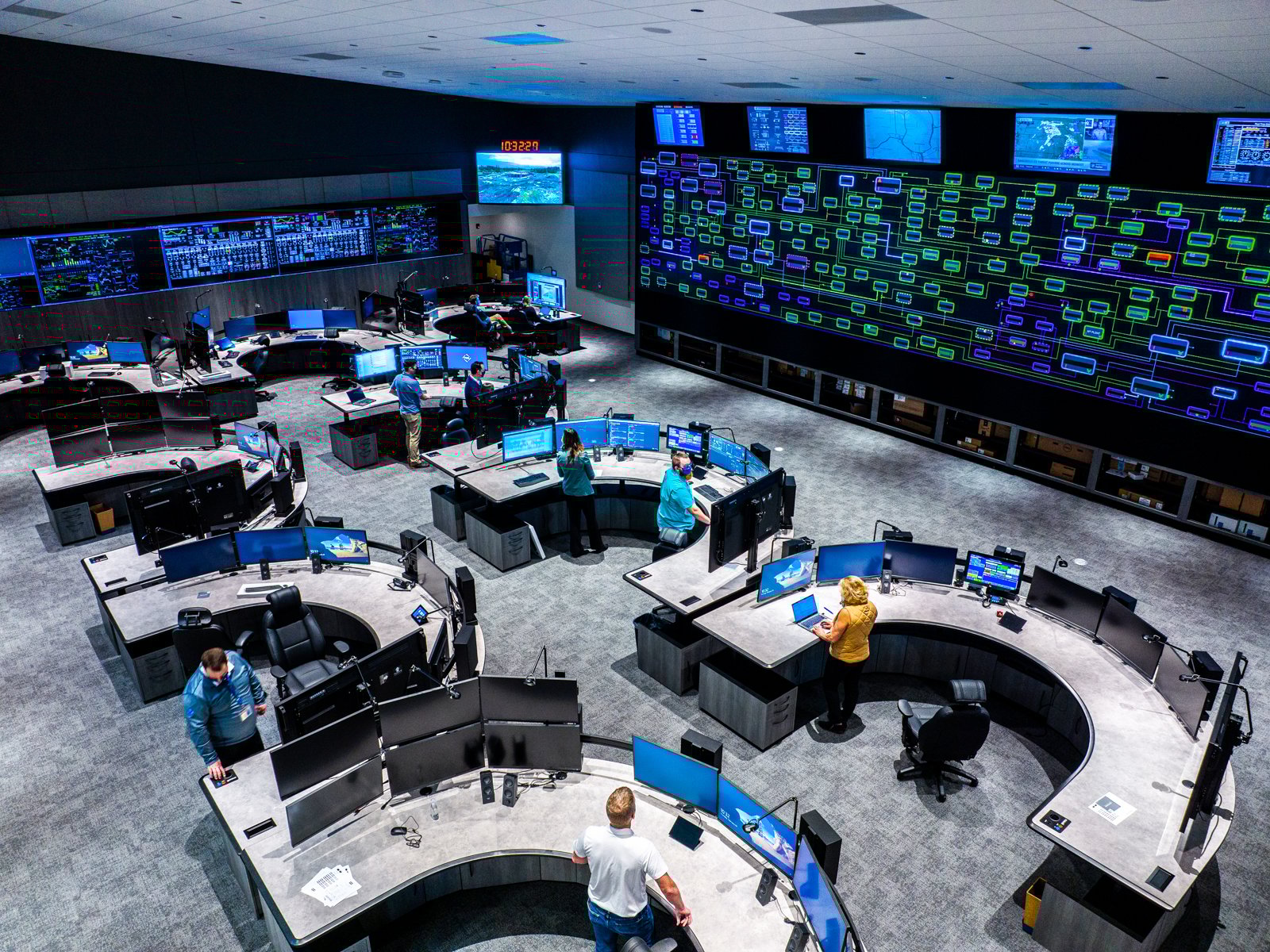
For decades, the video wall has been the defining feature of the control room.
As display technology advanced, walls became larger, sharper, and more densely packed with information. More feeds, more dashboards, more data. The underlying assumption was straightforward: if operators could see more, they would make better decisions. As a data-guy, that idea is hard not to get excited about.
However, when incidents actually occur, the same patterns continue to surface. Content is rearranged manually. Operators rely on side conversations to establish context. Critical information lives in separate systems, on separate screens, often managed by separate teams. Despite the sophistication of modern control rooms, response still depends heavily on human coordination under pressure.
I’ve even heard operators admit that, in the middle of an incident, the most reliable “system” in the room wasn’t the video wall at all — it was a stack of sticky notes. Phone numbers. Status reminders. “Don’t forget to call this team.” When things move fast, pen and paper beat pixels, not because the wall isn’t visible, but because it isn’t usable in the moment.
In practice, simple visibility often stops at the screen.
When Showing Everything Still Isn’t Enough
Traditional video walls were built to display information, not to manage it.
Layouts are typically static, designed around “normal” conditions and rarely adapted in real time. When situations change, operators become the integration layer, mentally correlating data and translating what they see into actions across disconnected tools.
The wall reflects what is happening, but it rarely helps determine what should happen next.
As organizations introduced more operational systems—SCADA, GIS, analytics platforms, security systems, camera feeds—the problem became more pronounced. Instead of creating clarity, additional data often introduced fragmentation. Operators were left scanning dozens of screens, trying to identify what mattered most in the moment.
Visibility vs. Visual Operations
This is where an important distinction emerges.
Visibility (pun definitely intended) is about presentation.
Visual operations is about orchestration.
Visibility answers the question of what is being displayed. Visual operations focuses on what should happen next. In a visibility-driven (note the spelling difference) environment, layouts are static, coordination is manual, and response is reactive. In a visual operations environment, content adapts to context, information flows automatically to the right people, and response becomes intentional and repeatable.
Seeing, by itself, is passive. Operating is not.
The difference is subtle in concept, but profound in practice.
A Common Operational Challenge
Whether the environment is a utility control room, an emergency operations center, a transportation hub, a security operations center, or a data center, the challenge is strikingly similar.
Different industries operate under different constraints, but they all face the same reality: turning large volumes of information into coordinated, timely action is increasingly difficult when systems are disconnected, and workflows rely on manual effort.
What changes is the mission.
What remains constant is the need for orchestration.
Where vis|ability Fits
Let's start here: vis|ability Is Not Visibility
vis|ability does not act as another dashboard or traditional wall controller, but as the visual and operational layer that sits above sources, systems, and displays. vis|ability connects content to context, context to people, and people to action—allowing organizations to manage information as part of an intentional, secure workflow rather than a collection of screens.
visability creates value by bringing structure and intent to the visual layer of operations. Instead of treating displays as static surfaces, it treats them as part of an operational system that understands context, roles, and workflows. Information is organized and delivered purposefully, reducing cognitive load and allowing teams to focus on decisions rather than screen management.
When events occur, visability enables information to move predictably across walls, desktops, and locations, supporting coordinated response without relying on ad hoc communication. Workflows become repeatable, response becomes consistent, and operations become less dependent on individual experience in critical moments.
By acting as a connective layer above existing systems, vis|ability turns visibility into coordinated action — improving outcomes without replacing the tools organizations already rely on.
Instead of asking operators to adapt to the wall, the wall adapts to the operation.
Seeing Is Only the Beginning
The modern control room does not suffer from a lack of visibility. Screens are everywhere. Data is abundant. Resolution is no longer the constraint.
What’s missing is the connective tissue between seeing and doing.
When information is spread across disconnected systems, when coordination depends on manual effort, and when response relies more on experience than structure, even the most advanced video wall becomes a passive observer. It can show what is happening, but it cannot help determine what should happen next.
That gap — between awareness and action — is where operations succeed or fail.
This is where the idea of vis|ability not only lives up to its name but takes on its intended meaning. Not visibility in the traditional sense, but the ability to visualize information in a way that supports real operations. The ability to organize context, align teams, and turn what is seen into what is done.
Visual operations does not replace the video wall. It completes it. And in modern operations, that completion is the difference between awareness and outcome.